“What is mastery? Staying on the path.”
https://classic.esquire.com/article/1987/5/1/playing-for-keeps
“What is mastery? Staying on the path.”
https://classic.esquire.com/article/1987/5/1/playing-for-keeps
Nikolai Aleksandrovich Bernstein (Russian: Никола́й Алекса́ндрович Бернште́йн; 5 November 1896 – 16 January 1966) was a Soviet neurophysiologist who has pioneered motion-tracking devices and formal processing of information obtained from the use of these devices. He was also one of first psychologists to suggest that behaviour is generative, constructive and not reactive.
My hockey agility teacher, Yasha Smushkin, was a student of Bernstein.
Hockey play is generative, constructive not reactive. Because of the handicap imposed by handedness, these handcuffs keep the game stuck in reaction. Meanwhile Two Way Hockey Agility gives the game back to itself, back to its positively constructive roots.
If we want players to have the whole picture then it is essential they study two way hockey agility. Right now the game mainly serves profit..
“Could you succeed in doing this?“ I asked. “No,” admitted Paul. “But we did get an idea of how it will feel when we shall have worked up to that point.”
“Is it really so difficult?” I asked, puzzled. “At first it looks easy. And yet not one of us was able to do the exercise properly. Apparently there is no escape from completely transforming ourselves if we are to be adapted to the demands of our art. Defects that pass in ordinary life become noticeable in the glare of the footlights and they make a definite impression on the public.”…
Since they did not succeed in part they could not succeed in the whole exercise, which was so much more difficult. Page 104 An Actor Prepares by Stanislavski
“There’s a connection between faith in something transcendent and the production of real beauty.” Bishop Barron
https://youtu.be/bSosx6MzIcg?si=0ix7vdlpo78y-kP_
“In the history of our species, in the history of Homo sapiens, the book is anthropological development, similar essentially to the invention of the wheel. Having emerged in order to give us some idea not so much of our origins as of what that sapiens is capable of, a book constitutes a means of transportation through the space of experience, at the speed of a turning page. This movement, like every movement, becomes a flight from the common denominator, from an attempt to elevate this denominator’s line, previously never reaching higher than the groin, to our heart, to our consciousness, to our imagination. This flight is the flight in the direction of “uncommon visage”, in the direction of the numerator, in the direction of autonomy, in the direction of privacy. Regardless of whose image we are created in, there are already five billion of us, and for a human being there is no other future save that outlined by art. Otherwise, what lies ahead is the past – the political one, first of all, with all its mass police entertainments.” joseph Brodsky ‘Uncommon Visage’
All these curves out there crooked.. Players are trying to fit their molds not their own.. two way hockey discards their mold.. stronger integrated skillful resourceful
The business of the game has perverted the art of it.
It’s why we don’t see higher levels of excellence in play.
I’d rather work at Walmart than lay down for a business paradigm. Is that what the game is suppose to teach? Certain there is another teacher for that way..
Lou Lamoriello said this about Zach Parise in this NYT article https://www.nytimes.com/athletic/5488324/2024/05/13/avalanche-stars-parise-suter-nhl-playoffs/
We can see he looks for commitment, love, work, and play in players. And he is talent agnostic— he prefers talent over incompetence in any case. I think this is where we see the crossroads of imposing on players learning the ‘right way’ we lose the frame of talents, players’ having a proper relationship with their individual abilities and allowing them space to foster them.
Wishing for themselves and their opponents to win is a rare approach. To foster the growth of the friendship. That’s a rare orientation. Win-win.
“It is impossible. That’s what makes it beautiful.” -Berlin
From La Casa de Papel season 3 episode 3
https://youtube.com/shorts/nMEPGM6Kkqw?si=Z9gtVPKwJATb_ClM
Hockey is a just a game some might say. To me it’s more than that.
It matters how we play. Using crooked tools— physical and psychological— assaults our inbred conscience that orients social games towards fair play and justice. But for some reason our game relinquishes some of the better reasons for play. Play is pro-social, pro-active. It helps refine character and determination. When hockey sticks are crooked are the players made then in that image? Might our communities be suffering from an intense level of crooked play and how might we confront that or even better— prepare the next generation to overcome it?
Only through a lens of an intrinsic motivation might you begin to appreciate the road I hope the game travels down.
Credit to John Riley for sending me this clip illustrating how the Rangers are winning draws at a 76% clip.
https://x.com/nhlnetwork/status/1729862796610093295?s=42&t=UZywpL6ww_RDsVyxFthItQ
So simple— low hanging fruit for the taking..
“They’re ain’t no hacks. You misunderstand that then you have a real problem.” -David Goggins @ minute 59
https://youtu.be/nDLb8_wgX50?si=pV4g-O9ABgdwp1kC
The longer we accept players playing crooked the longer we give them an incomplete and confusing learning curve.
The community decides whether we create a game of laws or a game of men for future players to grow into (paraphrasing Marbury v Madison).
“Most people are good enough so that they don’t go wrung after wrung.” -Andrew Huberman @ 1 hour mark
From Jerry Lynch and the Way of Champions I inherited the idea of making circles with teams. Off the ice in the room players stand beside each other on the same level creating what exists in the middle the culture and values and group identity. And by the defense of the Boston bruins play these days it’s clear we’re growing ever closer to the five man unit play. So I thought of the interesting symmetry that could exist between the circle exercise off the ice and a circle attack on the ice where players follow each other in an ever evolving circular pattern attempting to either create or disrupt successful plays based on time and space, their teammates and opponents.
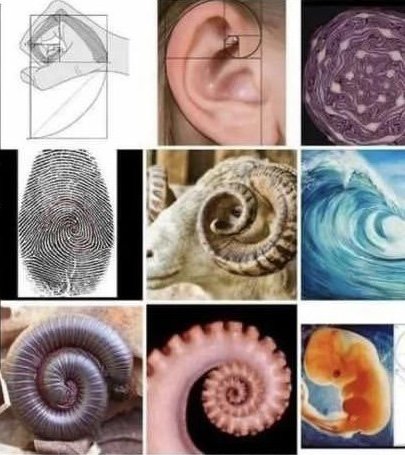
But my intuition goes further to invite a spiral structure instead certainly on the defensive side to shrink the space given and coordinate with teammates the creation of some decentralized autonomous organization where players have the utmost autonomy to cooperate and improvise. We see spirals in nature. They are built into the fabric of reality and if hockey is a game to learn about life and prepare wonderful players for play in all realms then a spiraling reflects the fundamental flowing structure of the game and creates natural thinking patterns for players to adapt to.
Without two ways Hockey becomes checkers. Hat tip to my friend Ryan Shannon for this one.
I wonder if the game’s environment engenders a certain harshness that caps the delicacy we can bring to the game? I like to think— NO!